
Starting your pottery journey means learning a few essential techniques that open the door to endless creativity. Hand-building, for example, teaches you how to shape clay with the simplest tools—your hands—allowing you to create bowls, cups, and decorative pieces without a wheel. Pinching and coiling help beginners understand how clay moves and responds, building confidence with every touch. As you progress, wheel throwing introduces you to a new rhythm, where balance, pressure, and patience work together to form elegant shapes. Trimming and smoothing refine your piece, helping you develop an eye for detail. Finally, glazing adds color and depth, transforming raw clay into functional art. Together, these techniques form the foundation of your pottery skills and spark a lifelong love for the craft.
Pinching Technique
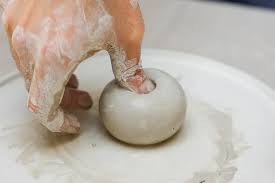
The pinching technique is one of the simplest and most intuitive ways to shape clay, making it perfect for beginners. By gently pressing your thumb into a ball of clay and slowly rotating it, you can form bowls, cups, and small sculptural pieces. This method helps you understand clay’s natural response to touch. It strengthens your hand control and builds your confidence as a maker. Pinching teaches you the importance of even walls and balanced pressure. It’s a calming, meditative process that connects you directly with the clay.
Coiling Method
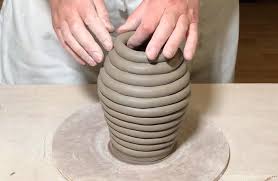
The coiling method is a traditional pottery technique that allows you to build larger forms with simple rolled clay ropes. By stacking and blending these coils, you can create pots, vases, and organic shapes with beautiful textures. This technique encourages creativity because each piece can have its own unique curves and character. It also helps beginners learn patience and control over clay thickness. Coiling is great for experimenting with height and shape structure. The slow-building process makes it deeply satisfying.
Slab Building
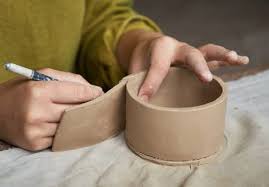
Slab building involves rolling out flat pieces of clay and assembling them like a puzzle to form functional or artistic pieces. Beginners love this method because it offers precise shaping and clean lines. You can make boxes, trays, mugs, and decorative forms by cutting and joining slabs. It teaches the importance of scoring, slipping, and careful handling to prevent cracks. Slab work also opens doors to surface textures and patterns. It’s ideal for those who enjoy structure and design.
Wheel Throwing Basics
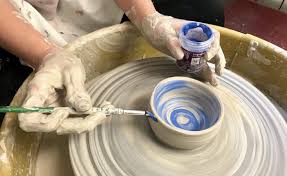
Wheel throwing is an exciting step for beginners who want to experience the rhythmic motion of the pottery wheel. It teaches essential skills like centering clay, pulling walls, and shaping symmetrical vessels. While challenging at first, mastering the wheel builds hand coordination and confidence. Each spin of the wheel helps you understand clay’s balance and behavior. It’s a technique that grows with practice and patience. Nothing matches the joy of lifting your first perfectly thrown bowl off the wheel.
Sgraffito Decoration
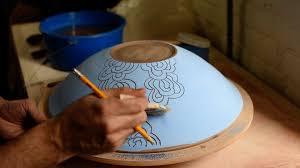
Sgraffito is a stunning decorative technique where you carve designs into a contrasting slip layer. It allows beginners to explore drawing and carving directly on their clay pieces. The process reveals beautiful lines, patterns, and textures. Sgraffito transforms simple forms into expressive works of art. It helps you develop precision and attention to detail. Whether you prefer fine lines or bold patterns, this technique opens endless creative possibilities.
Glazing Techniques
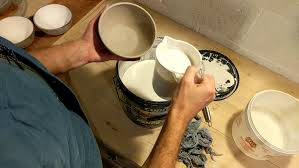
Glazing brings your pottery to life with color, shine, and protective finishes. Beginners can experiment with different types of glazes—matte, glossy, speckled, or layered effects. Understanding glaze thickness and application helps you control the final look of your piece. Brushing, dipping, and pouring all create unique outcomes. Glazing is where science meets creativity, often resulting in beautiful surprises from the kiln. It’s the final step that gives your handmade work its personality.